Tunnelling Into the Future: How Technology, Safety, and Local Wins Shaped Melbourne’s New Metro Tunnel

Metro-Tunnel_Arden-Station-768x512
News
10 Oct 2025
ICN News

The Victoria Premier, Jacinta Allan, has just announced that the new Melbourne Metro Tunnel (MMT) will open ahead of schedule in early December 2025. As station handovers continue and public tours give Victorians their first look inside, ICN Victoria is proud to see its localisation efforts come to fruition, connecting one of the state’s most transformative infrastructure projects with local capability.

A new era of connectivity

The Metro Tunnel upgrade is underpinned by cutting-edge technology, including the installation of High-Capacity Signalling (HCS) throughout the tunnel and parts of the Cranbourne, Pakenham, and Sunbury lines.

Delivered by local supplier Alstom, the HCS system uses the ‘Urbalis Flo’ Communications-Based Train Control (CBTC) solution. Comparable to adaptive cruise control in cars, CBCT uses wireless, continuous communication technology to automatically adjust and maintain speed, enabling trains to safely travel closer together at speeds of up to 80 km/h. The deployment of HCS on an existing rail network signifies an Australian-first and turns a ‘turn up and go’ standard of service into reality.

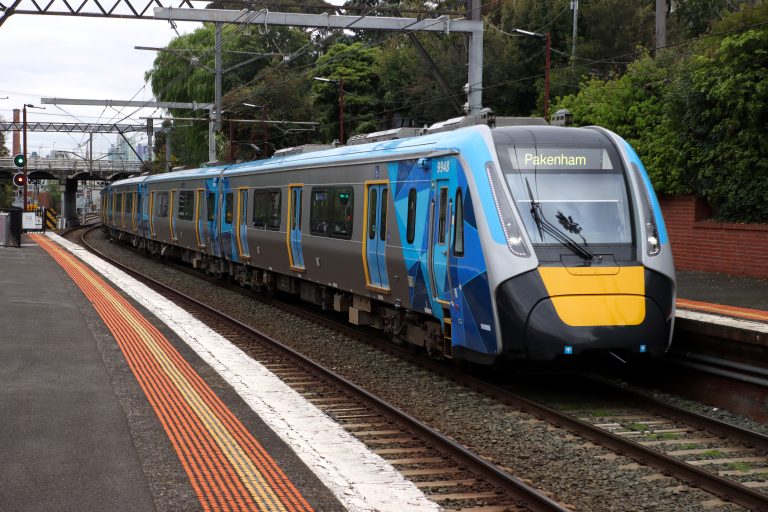
Alstom’s Dandenong manufacturing facility, which has been a cornerstone of Victoria’s rail industry for over 70 years, has also been central to the delivery of Victoria’s locally built High-Capacity Metro Trains (HCMTs). These seven-car electric multiple units are the most advanced in the Metro Trains fleet, offering 20% more capacity than previous models and featuring cutting-edge accessibility enhancements such as automatic ramps, priority seating, and real-time passenger information displays.

The HCMTs are undergoing final testing on the Sunbury line for the MMT, with test trains having already travelled over 140,000 kilometres.

And, of course, all stations are equipped with Platform Screen Doors (PSDs) - a first for Melbourne. The PSDs have been developed closely alongside local Project Managers from Alstom to synchronise with train doors, enhancing safety, climate control, and tunnel ventilation.
HCMT_train-768x512

Innovation meets inclusion

The MMT project has also created ample opportunity for local creative talent to shine.

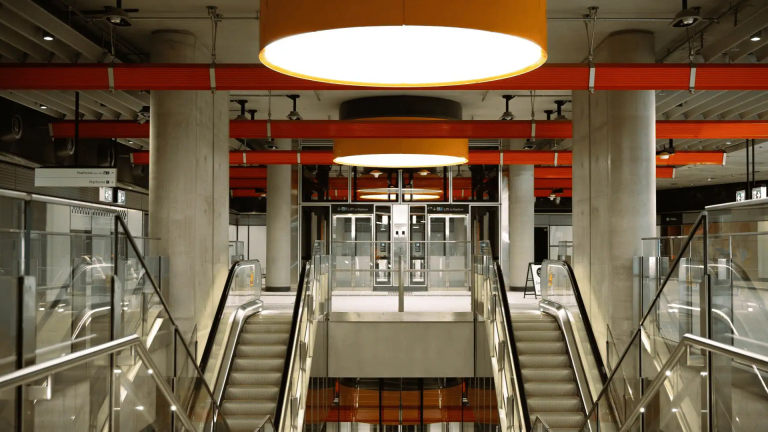
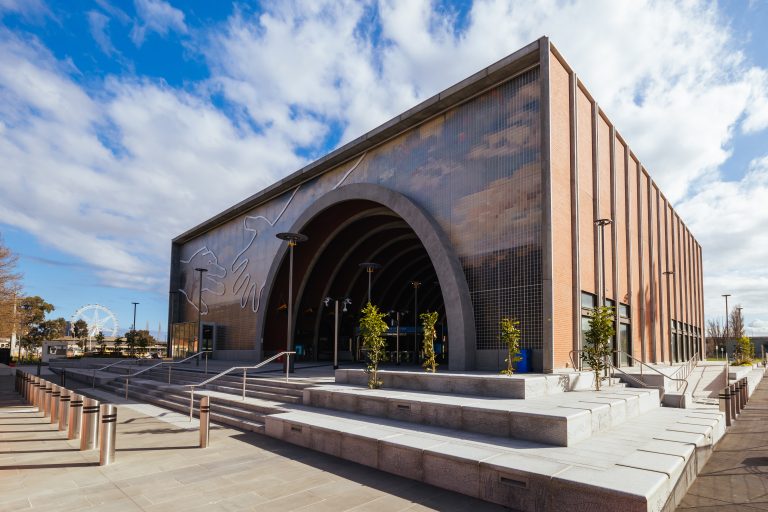
Each of the five new stations infuses unique architectural and cultural elements. Arden Station features hand-laid Victorian bricks, an elevated flood-proof design, and Maree Clarke’s ‘Tracks’ artwork, entailing laser-cut granite footprints representing the five Kulin Nation clans. Parkville Station is home to Patricia Piccinini’s ‘Vernal Glade’ in the concourse. State Library Station boasts 19-metre-wide platforms, 10-metre-high arched ceilings, and chandeliers crafted in Melbourne, while Danie Mellor’s ‘Forever’ adorns the entrance.

Town Hall Station also features some of the world’s widest underground platforms, meanwhile Anzac Station showcases Raafat Ishak’s major artwork in the concourse.

Metro-Tunnel_Arden-Station-768x512

Helping Local Win – Maximising Local Content

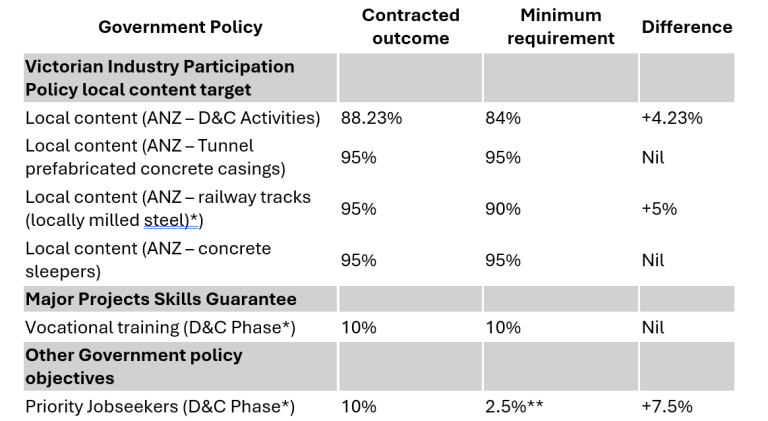
ICN Victoria has played a vital role in connecting MMT with the right local suppliers, ensuring they have the capability, innovation, and resilience to meet and exceed the highest industry benchmarks. This ensured the MMT met and exceeded the project's mandated minimum of 88.3% local content (Table 1).

Screenshot-2025-10-10-104436-768x421

ICN Victoria worked with companies such as Stilcon, a premium Gateway supplier to connect them to the MMT project. Former ICN Victoria Industry Advisor, Noel Morton, identified a match between Stilcon’s capabilities and the MMT project’s requirements, prompting Group Director Tony Ballantyne to pursue the tender. Stilcon benefited from early visibility into relevant opportunities and market trends and aligned its strategic planning to ensure growth. As Tony noted:

“We base our 3-year strategic planning on such information so that Stilcon continues to grow, contributes to more job creation and keeps our local manufacturing busy”. 

Stilcon also diversified into high-volume, lightweight steel fabrication for the project - an area they may not have explored without ICN Victoria’s support.

Other local success stories include Copamate which collaborated with ISM Objects to play a pivotal role in the manufacture of bespoke light fittings for the MMT project – helping the project meet its local content targets. Last night, they were a winner at the 2025 Victorian Manufacturing Hall of Fame Awards, with Jo Hocking taking out the Woman Manufacturer of the Year Award.

image-6-1-768x432

Local business Holcim developed a structural-grade concrete with up to 50% recycled glass for use in the project and InfraBuild manufactured prefabricated cages for the structures. ICN Victoria is proud to have worked with companies such as these to ensure local businesses have full and fair opportunity to work on such a major state project.

Throughout nearly a decade of planning and tunnelling beneath the CBD, the Victorian Local Jobs First policy, administered by ICN Victoria, has been instrumental to local industry uplift and support for local capability in the MMT.  With the keys to three of the five new underground stations now officially handed over to Metro Trains and an early launch now announced, the project has reached a major milestone, and anticipation is building as Melbourne prepares to welcome a new era of rail connectivity.

Charlotte Morrison
Senior Industry Research Analyst
Industry Capability Network (ICN) Victoria